
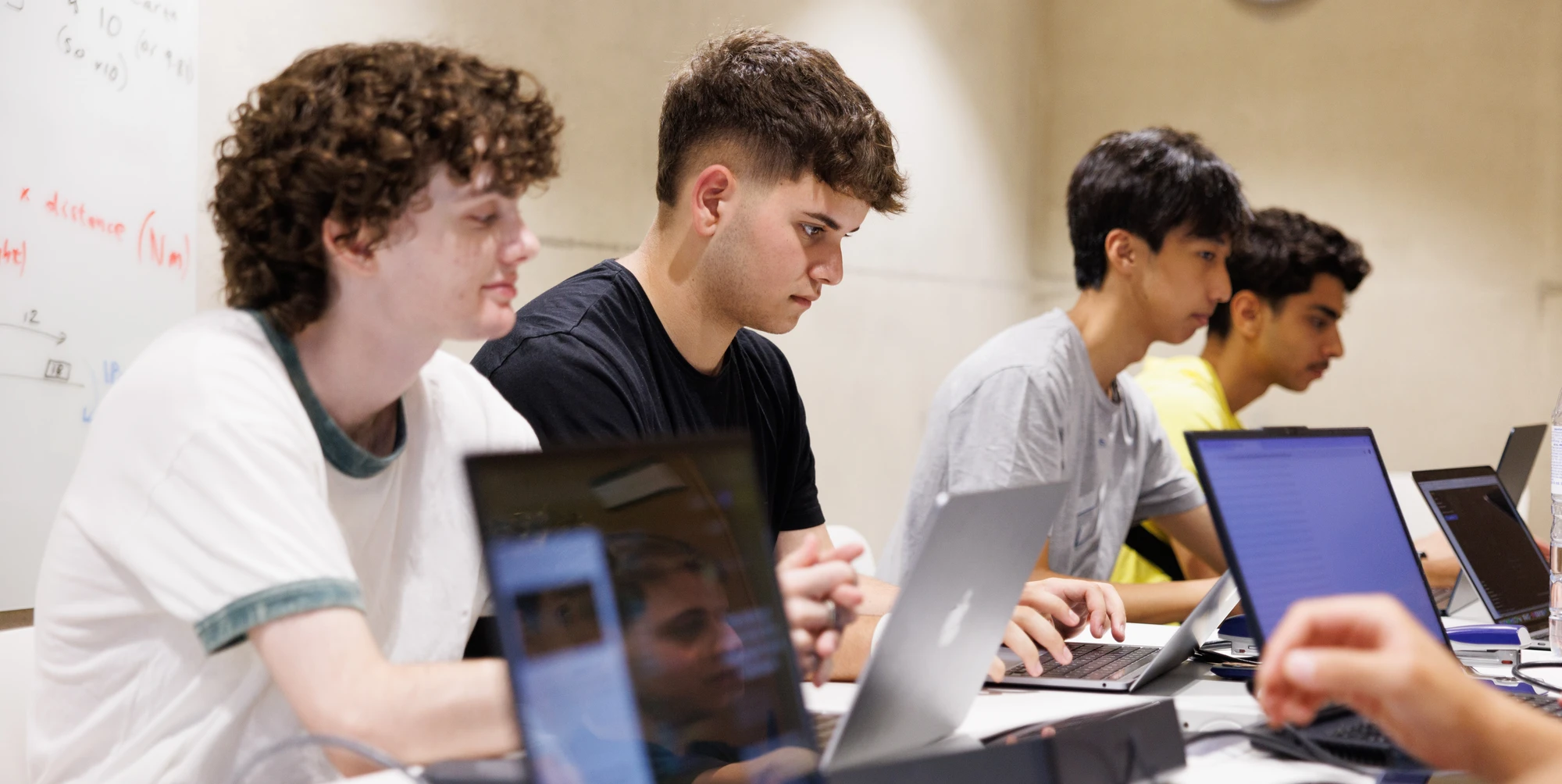

Education is most meaningful when students themselves can see its purpose. As artificial intelligence becomes more embedded in how teenagers learn, we wanted to understand whether young people are embracing these technologies or pushing back against them.
Working with over 60 students on The Panel, we explored how teenagers aged 13 to 18 feel about AI in education. We asked what skills matter most to them, whether they want more AI training in school, how much they rely on AI tools for their work and how confident they feel using them. The findings suggest that young people are navigating AI with a clearer sense of priorities than many adults might expect, keen to protect core academic skills even as they experiment with new technologies.
Key Takeaways
- Ethics ranks highest. Understanding the ethics and risks of AI was the top-priority skill for students, prioritised far above technical abilities like coding or data analysis.
- Core skills are protected. 47 students disagreed with reducing school time spent on basic skills in favour of AI tools, compared with only 13 who agreed.
- Human teaching remains essential. 87.7% of Panellists rated learning directly from human teachers as “extremely” or “very” important.
- Confidence aligns with usage. Students who reported feeling confident using AI tools also recorded higher average usage frequency, suggesting familiarity builds assurance.
- Critical thinking over technical skills. When asked which skill they most wanted to improve themselves rather than rely on AI for, critical thinking and analysis led.
We Help Students Seize the Future
Our immersive programmes give young people with big dreams the opportunity to unlock their potential.
Students Prioritise AI Ethics Over Technical Skills
When we asked Panellists which AI-related skill they felt was most important in learning today, understanding the ethics and risks of AI came first, cited by 21 respondents. The next most-valued skills were practical and application-focused: using AI for creative ideas such as projects and essays (13) and writing good prompts or questions for AI (12).
Together, these three priorities account for the majority of responses, revealing a clear preference for ethical awareness and thoughtful use over technical expertise. Lower on the list were checking if AI answers are accurate (9), using AI to plan or organise studies (6) and a very small number who considered it not important at all.
What stands out is the degree to which students themselves recognise that knowing how to use AI responsibly – and understanding its limitations – matters more than simply knowing how to operate it.
Which AI-related skill feels most important for you in your learning today?
21
13
12
9
6
Similarly, when asked to choose one new AI-related focus for schools to add into their curricula, students prioritised ethics and practical application over technical training.
Students appear to be looking for educational content that helps them better understand AI’s broader implications and practical uses, rather than explicit instruction in how to build or program AI systems themselves.
Strong Resistance to Reducing Time on Core Skills
Students were asked whether they agreed with the idea of schools spending less time on basic or core skills and more time learning AI tools. The response was overwhelmingly negative: 47 respondents disagreed, compared with just 13 who agreed. No respondents selected “neither agree nor disagree”, indicating that most students hold a clear position on the matter.
This broad preference for keeping core skills central challenges the assumption that young people, as digital natives, would naturally favour shifting curriculum time towards new technologies. Instead, students appear to recognise that foundational competencies – such as reading, writing, numeracy and critical thinking – remain the bedrock of learning, even in an AI-enhanced environment.
Maths vs Writing Skills
We also explored how students perceive the future importance of specific skills. When asked how important strong maths skills will be in an AI-heavy world, responses were fairly evenly distributed across all importance levels.
Writing, by contrast, received more responses at the highest importance level: 23 students rated strong writing skills as extremely important, compared with 17 who rated maths the same way.
“In the future, it is evident that AI writing tools will pave their way into our lives. However, I believe that this will only increase the importance of an authentic human voice. Millions of people around the world still read books and believe that stories and poems written by AI lack an evocative and creative tone. Although it can be immensely helpful in grammar and spelling correction, humans will continue to dominate the writing world.“
The concentration of maths responses in the “moderately important” category suggests students see it as useful but perhaps less critical in a future where AI can handle many calculations and data tasks.
Writing, meanwhile, appears to be perceived as more essential, possibly because it remains central to communication, creativity and presenting ideas – areas where human judgement is harder to automate.
Students See Moderate Benefit from AI
The majority of Panellists (~40%) feel that AI tools are moderately improving their learning. Only one respondent reported no improvement at all, and only five reported an extreme improvement. This distribution suggests a generally positive but measured view: most students see some benefit, but strong or transformative impacts are less common.
How much do you feel AI tools are improving your learning overall?
5
16
25
16
1
When it comes to confidence using AI tools for schoolwork, the pattern is similar, with 67% of Panellists reporting feeling slightly or moderately confident. What stands out is that higher self-reported confidence correlates directly with more frequent AI use: those who said they were very confident reported an average usage score of 3.89 out of 5, while extremely confident users averaged 4.67. In other words, confidence appears to grow with experience.
Out of 63 Panellists, only three students said they never use AI tools for schoolwork or revision, indicating that overall adoption is high. The data suggests most teens engage with AI intermittently rather than exclusively or daily, which aligns with responses about confidence and perceived benefit. Students appear to be experimenting with AI tools as supplements to traditional study methods rather than replacing those methods entirely.
Human Teaching Remains Highly Valued
Despite the availability of AI tools, learning directly from human teachers was overwhelmingly valued by students. 39 respondents rated it as extremely important and 18 as very important, accounting for 87.7% of total responses.
“I personally believe that learning from human teachers is far more valuable than learning from AI. I learn better, engage more, connect with my teachers personally and am able to get more detailed and tailored explanations of topics. Teachers also provide support pillars for many students in school communities. It is important for students to connect and learn from teachers.”
This overwhelming preference persists even among students who regularly use AI tools for their schoolwork. It suggests that while AI may assist with tasks like research, drafting or revision, students still see human interaction – explanation, feedback and encouragement – as irreplaceable in the learning process.
Top Skills Students Want to Develop
Finally, we asked students which skills they most want to improve themselves, rather than relying on AI to perform them. Critical thinking and analysis was the clear winner, chosen by 22 Panellists (32%). Creativity and original ideas came next with 16 responses, followed by writing and communication with 14. Together, these three account for nearly half of all responses, highlighting a strong emphasis on cognitive and expressive abilities.
Maths and problem-solving (8 responses) and speaking and presenting (8 responses) were less prioritised, suggesting students view these skills as either less central to their personal development or more suitable for AI assistance.
The pattern reinforces a broader theme: students want to retain ownership of skills that define how they think, create and communicate, rather than outsource those capacities to machines.
“I tend to use AI to help create quick flashcards for revision or clear doubts quickly. I see it as a supplementary resource rather than a replacement for independent thinking, and I remain mindful of how to use it to my benefit and not entirely depend on it.“
What Does This Mean?
Taken together, these findings challenge the assumption that today’s teenagers are uncritical consumers of AI. Instead, teens have clear priorities: ethical understanding, core academic skills and direct human teaching. Students use AI tools frequently, but not blindly. They recognise both the practical benefits and the limits, and they want to develop the skills that AI cannot replicate – critical thinking, creativity and communication.
For parents and educators, the message is reassuring. Young people are not abandoning the fundamentals; they are asking for help navigating a more complex landscape, one where technology is a tool to be used wisely rather than a substitute for thinking. The challenge now is ensuring that schools provide the ethical frameworks, career guidance and thoughtful integration students are asking for, while protecting the space for deep, human-led learning.
Build The Skills That Matter Most
Our immersive programmes give young people with big dreams the clarity and confidence to thrive in an ever-changing world.

Methodology. Oxford Scholastica Academy collected original data from students aged 13–18 on The Panel. All findings reported in this article are based exclusively on responses provided by participants in this survey.

By Oxford Scholastica Academy
Since 2013, Oxford Scholastica’s award-winning programmes have empowered thousands of students to seize the future. We have welcomed bright students from around the globe for more than a decade, giving them the edge to help them succeed, find their purpose and make a difference in the world.